

Ice Age Ponds
Ice Age Ponds are a rare habitat within the UK with only 1% of ponds falling into this category. In Herefordshire 25% of the county was glaciated and we are fortunate to have hundreds of extant examples. There are, potentially, hundreds more ‘ghost’ Ice Age Ponds; ponds that have been buried, ploughed over or otherwise damaged. Many of these 'ghosts' have the possibility for restoration through excavating and carefully re-exposing their relict seedbanks. Recent work to restore similar sites in Norfolk has seen the return of locally extinct plant species, meaning that these ‘lost’ ancient habitats have been reinstated and are once again able to sequester carbon. We hope to encourage the same management practices in Herefordshire, with huge benefit to local habitats and their ability to sequester carbon with a long-term potential to impact global warming.
Ice Age ponds are defined and identified by physical criteria such as their shape and the physical characteristics of the rock types and landscape that contains them. In addition to having been created during the Pleistocene Epoch (about 2.5 million to 11,700 years ago), they must comprise a standing body of water between one square metre and 2 hectares in area. The ponds can hold water permanently or seasonally, potentially drying for up to 8 months of the year.
The majority of existing ice age ponds In Herefordshire were formed during the last glacial period, the Devensian Glaciation 115,000 to 11,700 years ago at a time when mammoths roamed our landscape. They include ponds created by the direct erosional and depositional action of glaciers and their outwash, together with ponds created by periglacial activity in cold regions not always directly affected by glaciers. Various types of pond are recognised: ponds in ground ice depressions, including pingos, palsas and lithalsas; also Kettle Hole ponds, including some smaller meres. Kettle Hole ponds comprise the he majority of ice age ponds in Herefordshire.
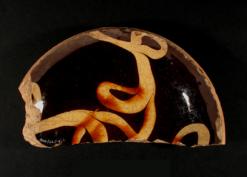
While the biological quality of the pond and its species assemblage is not a qualifying criterion, it is worth noting that England’s Ice Age ponds support some of the UK’s most important freshwater assemblages. These include 'relict species' that are rare and endangered in other habitat types. In Herefordshire, Ice Age ponds support a wide range of uncommon and restricted species, including important assemblages of water beetles. Red-listed species restricted to ice age ponds include the nationally vulnerable Lesser Spangled Diving Beetle Graphoderus cinereus, the diving beetle Agabus undulatus, the water scavenger beetle Helochares obscurus, and the long-toed water beetle Dryops auriculatus. Other species, including Enochrus nigritus and Hydrochus elongatus are largely restricted to Ice Age ponds in the county, while Euconomelus lepidus, a planthopper commonly found on spike rush, was newly discovered recently in Herefordshire at two ice age pond sites. Other notable species of these pools are Medicinal Leech (Hirudo medicinalis) and the red listed plants: Tubular Water-dropwort (Oenanthe fistulosa), and Water Violet (Hottonia palustris). Moccas Park Lawn Pool, likely formed in an ancient glacial channel, is the only site in Herefordshire for Bladderwort (Utricularia australis).
Further reading and resources
Watson, W.R.C., Andrews, B.A. & King-Salter 2022. Herefordshire’s Ice Age Ponds Transaction of the Woolhope Naturalists’ Field Club. Volume 70
Williams. P., Watson, W.R.C., King-Salter & Hammond. M 2023 Defining and mapping Irreplaceable Habitats. Freshwater Habitats Trust.