
History
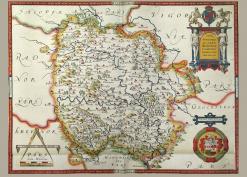
Since the early Middle Ages Herefordshire’s history has been dominated by the county’s position on the Welsh border. The modern county boundaries evolved during the Anglo-Saxon period as the English kingdoms pushed westwards. After the Conquest the Norman kings defended the frontier by giving extraordinary powers to Marcher lords, powers which they retained until the Tudor period. Over 20 castles, mostly ruined, remain in the county, and many others, including that at Hereford, have been destroyed. Memories of Welsh conflicts are reflected in the survival of Welsh place-names in the west of the county. Throughout its history Herefordshire’s economy has been based on agriculture, which in addition to grain and livestock produced cider apples and hops, and the renowned Hereford beef cattle.
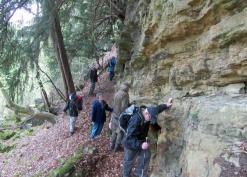
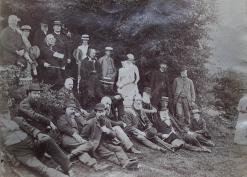
The Woolhope Club’s publications, talks and field meetings cover all aspects of Herefordshire’s history, from the county’s origins to the present day. Topics have included landscape history, the development of estates, the growth of market towns, agriculture and horticulture, the church and changes in religious belief, and wars including the Civil War. The Club has also investigated the way in which social, economic and military change played out in a rural county from the 18th century to the 20th.
In addition to its annual Transactions, the Club has published volumes of essays, early 16th-century tax records, and the important Herefordshire Pomona. The Club also contributes to the cost of publishing historical books, thus bringing new research to public attention, and working directly with authors and historical societies. Club members are actively involved in the work of the Victoria County History of Herefordshire, and the Club has contributed to the publication costs of several parish histories.
From time to time the Club and its members have initiated large-scale projects, notably the award-winning Field Names Project, which placed on-line all the field names recorded on the 19th-century tithe awards Other projects have included work on deserted medieval villages, the study of the origins and use of weirs, and the digitisation of 16th-century tax records.
Every year the Club’s lectures and field meetings contain much to interest both experienced historians and those seeking better to understand the history of the county. All can access research about an extensive range of topics from the Club’s publications from the 1851 onwards by using the search facilities on this website. The Club’s library contains an important collection of books, maps and photographs readily available to researchers.
To ask any questions or make any suggestions about historical topics, please email the Club at history@woolhopeclub.org.uk.