
BUILDINGS
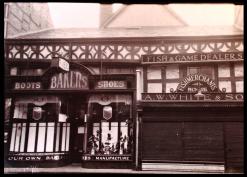
As well as the obviously historical buildings such as castles and churches, Herefordshire has a particularly fine stock of timber-framed buildings, though this is not always obvious from the outside. The adjectives ‘half-timbered’ and ‘black and white’ are not used these days, though there is the Black and White trail around the houses in the north of the county. Except in grander houses where the timber-framing was designed as a show of wealth, the exterior timbers and panels alike were often covered over with lime mortar to try to keep out the wind and rain. Even where exposed, the timbers were not usually painted black until the 19th century.
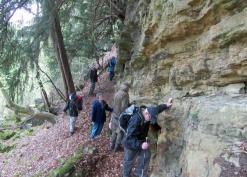
Since the 1920s there has been a much greater appreciation of the humbler buildings in the county with the study of ‘Vernacular Architecture’. The Woolhope Club's Ancient Buildings Recording Group was formed in 1964 under the leadership of Jim Tonkin, supported by the Extra-Mural Department of the University of Birmingham and the Workers' Education Association (WEA). Initially the group concentrated on recording buildings that under were under threat or about to be demolished. Details of houses were recorded on sheets and Jim built up an archive of slides. From 1964 until 2006 Jim's buildings reports appeared in the Transactions. After losing the support of the Extra-Mural Department, the buildings group met regularly and travelled to visit houses where unsuspecting owners sometimes found their bedrooms under siege while Club members accessed roof beams1
Duncan James has now taken over the job of Buildings Recorder and provides reports for the annual Transactions.
The Royal Commission on the Historical Monuments of England (RCHME)
Unfortunately, previous permission to publish images of the RCHME surveyors’ notebooks on the Woolhope Club website has now been withdrawn. These give far more information on the buildings they found, including photographs, not included in the printed volumes for Herefordshire.
The three printed volumes can be accessed at Volume 1 – South-west, Volume 2 – East, Volume 3 – North-west.